Reviews

Just Friends had the misfortune of ostensibly belonging to one of the more reviewer-reviled comic subgenres; lacking any sort of critical caché, its likes are usually thrown to the interns, written off in 48 states by some stooge on AP wire, or dealt “safe” pans by grandstanding writers.

I value these moves greatly because a filmed version of Jane Austen featuring an attractive cast of fresh faces and reliable codgers propping up a hot young ingénue needn’t choose to do any of them to find an audience.
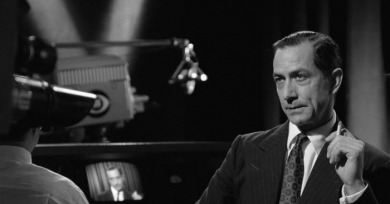
Good looking, smart, and responsible, George Clooney’s Good Night, and Good Luck performs its modest mission well.
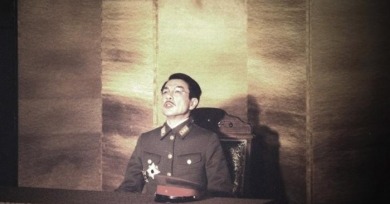
The baseness and comprehensibility of the human is inseparable from the often inhuman exercise of power, and it is the paradoxical, profoundly incomprehensible polarity of this truth which Sokurov’s deeply strange (I say it again) films address.
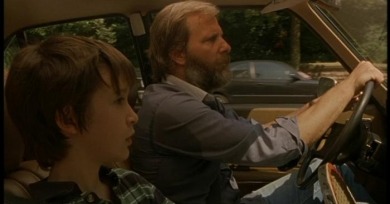
Dialogue is Baumbach’s forte, and there’s an economic and tonal quality to the language of fumbling interactions.

The tale is a tease, flirting first with one trajectory and then, growing bored with the implications, quickly skipping to the next, only to discard again, continue on to another. Because of its fickle nature, the tone feels discomfitingly random: distant and loose, as easily ironic as sincere.

The grubby, shaky-cam technique used in hot-topic features bearing the documentary tag these days betrays the ignorance of their makers—these folks may have important stories to tell, but that in no way frees them to indulge in substandard filmmaking.
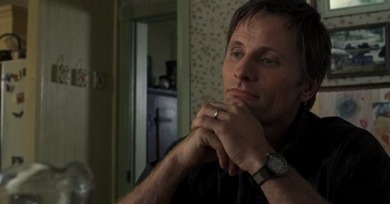
Uniquely positioned as both the best reviewed and least understood film of the year, A History of Violence is positively Verhoevian in its capacity to affirm entertainment expectations whilst savaging the immorality of both expectation and entertainment.

Since Forty Shades of Blue is essentially a melodrama-cum-woman’s picture, its success ultimately hinges far less on effective narrative than it does on raw emotion. In that regard, Sachs relies heavily on his actors.

The director opts for claustrophobic closeness over panorama; the topography of New York and North Bergen, Jersey indistinguishably smutch together in this film’s drear world, forming one continuous catacomb of exposed beams and naked brick, service-entrances and public restrooms, bulletproof glass and wet underpasses.
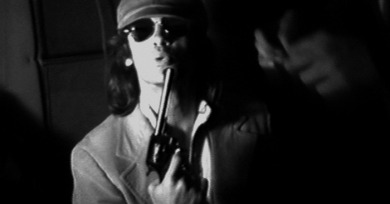
What’s the real subject here? I’m not sure it’s art—some of Eggleston’s most famous photos are reproduced onscreen, but they look crass, bleary.

Ostensibly a glimpse at the disrupted lives of three young brothers under the thumb of their tyrannical father after the death of their mother, Three Dancing Slaves is more of a treatise on postadolescent male angst and the stranglehold of dominant masculine roles.

Grizzly Man is a battle between two antagonistic voices—Herzog and Treadwell—with one common denominator: an uncontrollable craving for existential excess.
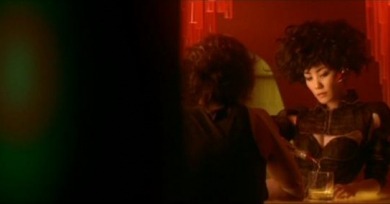
Whether explicitly or subtextually, all movies are about memory. Due to the alchemy of emulsion, film footage is memory made material, and, when projected, animate.