Reviews

I doubt that anyone will ever match the balanced stridency and sentimentality that Jonathan Richman’s song “Give Paris One More Chance” manages as a bursting, corny catalog of everything right about “the home of Piaf and Chevalier,” but Avenue Montaigne takes a crack.

There’s something dubious about a director paying overt homage to his influences, whether it’s Gus Van Sant’s tiresome shot-for-shot Psycho exercise, or Todd Haynes’s subtext-made-blatant Douglas Sirk "update" Far from Heaven, which must have made many ticket-buyers wonder “Would I be better off saving a few bucks and renting All That Heaven Allows?”

Love on the Ground’s progression is some stumbling version of art imitating life becoming life imitating art as the play (built on life) bleeds back into the relationships of the new performers

A teenage girl’s coming-of-age tale in werewolf’s clothes, Katja von Garnier’s Blood and Chocolate, based on a book by Annette Curtis Klause, is a risibly flawed amalgam of assorted generic clichés—if curiously ambitious in the number of archetypal themes pursued.
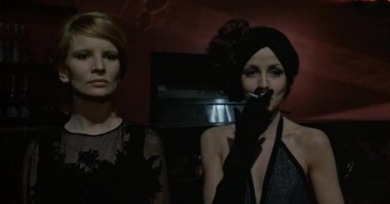
Available in France as double-disc set, Jacques Rivette’s two 1976 features, Duelle and Noroît, represent something of a perfect double-bill, though I’d only recommend it to those well initiated with his work.

Finally, Mike Judge’s “butchered,” “buried” second feature shrugs its way into widespread availability, ready-equipped with that most special of features: potential cult status.

I don’t want to call Garrel’s movie Great (though, oh, it is)—that’s one of those hefty words that tends to crush dialogue with the finality of its import, a disservice to a film that begs to be thought on, mixed-up with, bored or smothered by, but not put on a shelf labeled “Masterpiece” to gather dust and dispassionate appreciation.

By his second film, The Nun (also delayed, this time held up by censors), Rivette had easily surmounted the problems of his first feature, and delivered not only the first of many great works but one of the most seminal films of the Sixties.
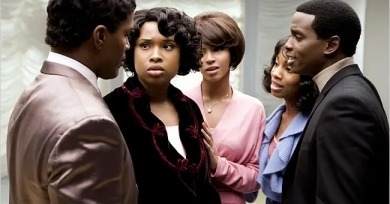
More Mariah than Motown, Dreamgirls is the thinly veiled story of the Supremes with bits of the histories of Stax and the “Chitlin’ Circuit” thrown in for some added street cred.

Woody Allen’s 1992 Husbands and Wives looks, with each passing year, more and more like the director’s one true post–Crimes and Misdemeanors masterpiece.

The cynical opportunism and outright phoniness behind Stallone’s flagship character need not be overstated: while resolute Rocky stays faithful as a mutt to frowsy wife, colorful Runyon-esque buddies, and country, Sly’s sticking it to Brigitte Nielsen in his trailer.
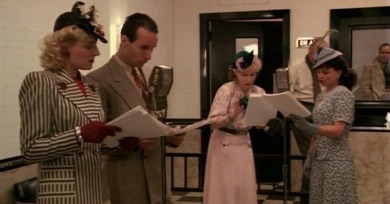
It’s a humble complacency that feels missing from most of Woody’s work, which does view wealth and privilege with the same love-hate relationship as Radio Days but also usually aligns itself with the upper-class Manhattan that Woody ascended to.

Coming right after the drenched-in-scandal Husbands and Wives surprised the mainstream movie world by employing jittery, handheld camerawork, Murder Mystery used the same shaky-cam for a completely different effect, lending the film’s intricate and silly crime-caper plot a scatterbrained immediacy.
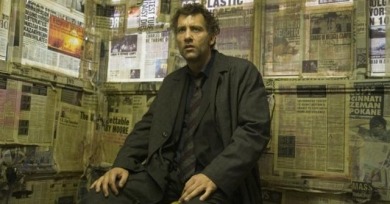
Doomed to disappear before it even sees the light of day, Children of Men seems the exact opposite of what the public wants to see during the holidays.