Reviews

In the context of a jingoistic or indifferent media, putting “assassination” in a title is transparent titillation, the promise of a Falling Down for liberals with the frisson of sedition.

Like his 1963 masterpiece Contempt, Notre musiques rigorous examination of cinema as fallible super-medium builds subtly into a powerful wave of hope, even despite itself.

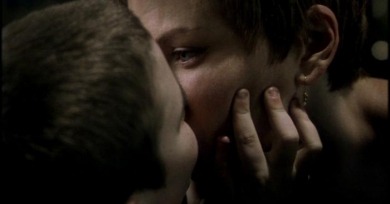
With Birth, Jonathan Glazer saves critics the troubling of anointing him a filmmaker to watch—he enacts the benediction for them, with every attention-grabbing shot and ostentatious directorial gesture.
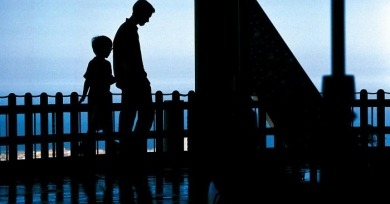
Death is present, literally, and tonally, from the first frames of The Machinist, subtly emanating from the washed-out darkness of the fluorescent-lit palette of blues, greens, and grays, which lends a murky, underwater complexion to the film's industrial wasteland setting.

When a film as bad as The Grudge, Takashi Shimizu's remake of his own 2002 Ju-On, makes so much damned money ($40 million in its opening weekend), it's pertinent to ask “why?”— preferably bellowing from one's knees, arms open to the dark and indifferent sky.
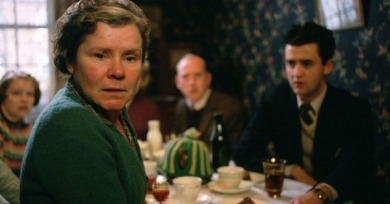
Leigh takes his examination of the “back alley” abortion a step further, replacing the commonly imagined horrors surrounding the practice (see a recent example in the dreadfully overwrought The Crime of Father Amaro) with something closer to warmth, even love.

The male protagonists in Alexander Payne's last three films are American counterparts to Chekhov's Vanya: melancholics desperate to slow a quickening slide. And like Chekhov, Payne eases his audience into the dark corners, summoning laughter that later gets caught in the throat.


Sembene's film is a feminist parable painted in a riot of bold colors and told with a jauntiness that belies the soberness of his themes about women coming together to make a change in their own homes and communities.
Notre musique is an improvement on the style Godard has been working in for the last 25-odd years, marking the first time Godard's belief in a fallen world-particularly a fallen world of cinema and the image-fully resonates.

There was a time when young men from small towns in Texas were forced to ship out to New York or Hollywood in order to fulfill their dream of seeing themselves on the big screen.
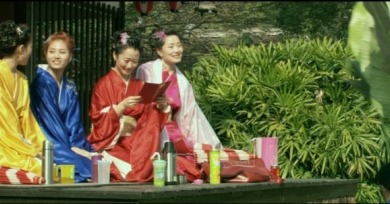

It is these kinds of shifts and merges which keep The Holy Girl elusive and mysterious, away from the quantification that would weigh its appropriateness as a Weinstein-worthy “prestige” product. Distinctiveness hasn't yet given way to brand-naming.