First Night:
The Woman in the Yard
Twelve years ago, for the closing night of our ninth edition of this annual Halloween column, I wrote about Jennifer Kent’s The Babadook. That film’s concept felt fresh and frightening, even novel in 2014: a monster in the house as a physical manifestation of grief and trauma. Kent’s storytelling dynamism and visual invention ensured that the film’s central ideas—the impossibility of repressing the memories that eat away at us, and the necessity of confronting them head-on, even if they can never be entirely vanquished—came across as robustly metaphorical. The film would prove influential: so many horror movies in its wake have doubled down on the idea that the genre is inherently strongest—even most legible—as an exploration of psychological damage that it’s become a cliché at this point; the derisive
“torture porn” moniker of the aughts has been replaced by “trauma porn” in the late teens and early 2020s.
The range in quality is wide—from Midsommar to the Smile films to the Australian horror renaissance kicked off with Talk to Me to Mike Flanagan’s tearjerking TV terrors—but what generally unites these films is that the characters tend to start off as deeply wounded, haunted by some shame or loss that will become the motivating factor (hidden or not) in their journey towards either redemption or rock-bottom despair. Many horror movies have employed similar kinds of psychological readings, but they were once more anomalous: sure, we’ve had The Seventh Victim (a film about depression, highly unusual for 1940s American cinema) and The Haunting (which stays faithful to its Shirley Jackson source material by delving into the ambiguous emotional impairment of its main characters), but most of our classic horror movies have been about innocents thrust into unimaginable situations: Rosemary’s Baby, The Exorcist, The Texas Chainsaw Massacre, The Omen, Poltergeist, Get Out. If The Blair Witch Project were made today, would Heather also be confronting the memory of her abusive father, seen in ponderous flashbacks? Horror has always had “teachable” moments, though they’re more along the lines of “don’t go into the woods without a compass” or “steer clear of motel showers.” It’s probably no surprise that the ascendance of grief horror—in which characters aren’t simply scrambling to survive but are implicitly trying to overcome something from their past—has coincided with the mainstreaming of the “self-care” industry. How can we trust our disreputable entertainment if it’s not a steppingstone on the way to wellness?
Moviegoers in general and horror lovers in particular seemed to have overdosed on grief horror by the time Jaume Collet-Serra’s The Woman in the Yard was released last year. Largely dismissed, if not disparaged, the film was something different for its director, an ace genre craftsman whose former descents into horror were classical, hearty, fast-paced, and in the case of Orphan, compellingly unsavory. Collet-Serra’s fans may have been surprised, even disappointed that with Woman in the Yard he preferred to take an emotionally and narratively claustrophobic, character-based approach. The film, with a script that writer Sam Stefanek has called deeply personal, undoubtedly fits more cleanly into this au courant form of grief horror, yet by ignoring it for its alleged 21st-century genre sins, viewers passed on a film with an elegant, pared-down design and a genuinely upsetting interior landscape that, for this viewer at least, was persuasively horrific and, finally, deeply moving.
Much of the film’s power comes from Danielle Deadwyler’s fully invested performance as Ramona, the recently widowed mother of a teenage boy, Taylor (Peyton Jackson), and a prepubescent girl, Annie (Estella Kahiha). The three live in a remote farmhouse, which we come to learn Ramona was already feeling isolated and disillusioned in before the car accident that claimed her husband David’s life. Far from civilization and neighbors and, as the film begins, without electricity due to delinquent payments, the family is barely getting by, stumbling over each other with resentment and confusion, while Ramona, her leg still in a cast, hobbles reluctantly through whatever domestic and maternal responsibilities she can manage.
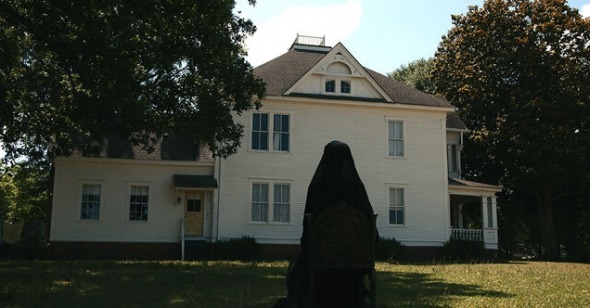
Deadwyler is a naturally sympathetic, beautifully transparent actor, so watching her descend into apathy is truly alarming; it quickly becomes clear that she’s not merely agonizing over her husband’s death but is severely depressed and hardly functioning. Soon enough, Taylor notices a figure perched on a bench in their front yard facing the house at an ominously polite distance, completely enshrouded in black tatters. The children somehow immediately clock this mystery person as a woman, although it would be impossible to know this due to the distance and the clothing—either an improbability or a psychic trick of the film. In finally gaining the courage to approach this sinister cloaked entity, Ramona asks it to leave their property. Staring back at her, the wraith (played by an excellent, unsettlingly composed Okwui Okpokwasili, her face barely visible behind the muslin veil) calmly states “Today’s the day,” and extends a pair of bloody hands.
Indeed, The Woman in the Yard will take place over the creeping expanse of one day, from sun-dappled, wide-open terror (the first shock cut is to curtains being opened) to the inky darkness of night. Within its circumscribed time frame and single location, Collet-Serra comes up with an array of unforced yet dramatic camera angles and positions that give this tightly enclosed world, shot in effectively destabilizing widescreen, a sense of variation and geometric pleasure. While burdened by the occasional car-crash flashback (done in subjective, slo-mo flourish, par for the course in 21st-century grief horror... The Babadook, Smile 2, even all the way back to The Descent), the limitations imposed by the narrative serve this film well, allowing the viewer to home in on the details and emotional resonances of Stefanek’s script. The fear that the cloaked figure elicits has less to do with “horror imagery” per se than with what it means for the characters. Shrouded and in black, the woman is a classical figure of mourning—in other words, an image of how a widow is “supposed” to behave, to hide herself away like the totaled car that still sits, covered in its own shroud in their yard.
Is the woman a Babadook, a literalization of grief? Or is she more simply, more eerily, a double? (The movie could have been titled Other Mommy.) This sort of mirroring becomes the fulcrum of the film: there’s even a joke about it, with a shot of a movie marquee showing Barbra Streisand’s The Mirror Has Two Faces, and there’s a barely noticeable trick mirror shot early in the film for the eagle-eyed. While such obvious psychological illustration (let’s call it explanatory ambiguity) might have painted other filmmakers into a corner, Collet-Serra’s restraint and Deadwyler’s wrenching dedication create a work of persuasively expressionistic, Southern Gothic-tinged horror.
The Woman in the Yard certainly isn’t above citing other horror landmarks. There are The Shining jokes aplenty, from Taylor’s bored bouncing off the walls with a rubber ball, to Annie’s inability to write her R’s facing forward, instantly echoing the backwards “R” in Danny’s RedRum scrawl (another mirror allusion). There’s more than a whiff of Rear Window suspense in watching Ramona, trying to protect herself and her loved ones while housebound and encased in a broken leg. And as the woman moves imperceptibly closer to the house, we may think of M. R. James’s uncanny “The Mezzotint,” a story of a haunted painting that alters only when you don’t look at it. (It’s a proper reference point, as Ramona is herself a painter—which we’re reminded of in the rather extraordinary final tracking shot.) All of this helps extricate The Woman in the Yard from the recesses of grief horror: I perceived more of an allegiance to the classics here, like Henry James’s doppelgänger masterwork “The Jolly Corner” or any number of Shirley Jackson’s studies of people immobilized by inextricable personal fears. Collet-Serra’s film doesn’t feel like it’s part of the grief horror trend but rather a prime example of why it made sense in the first place. —Michael Koresky
Second Night:
Magic
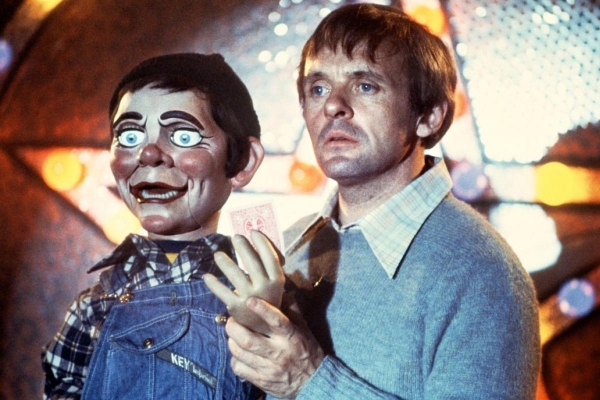
While Anthony Hopkins’s immortal Hannibal Lecter will forever be his most iconic “baddie” role, a silver medal or at least an honorable mention is due to his less-remembered Charles “Corky” Withers, the eventually murderous ventriloquist given to multiple personality disorder and unchecked rage issues from Richard Attenborough’s upsetting 1978 film Magic. “Bewilderingly miscast” according to Pauline Kael—who in fairness was justifiably baffled that this angry, sweaty, glowering puppetmaster could be a famous entertainer—Hopkins is, in fact, plumbing bottomless depths of an exaggerated form of the self-hatred and insecurity that plague so many performers and layfolk alike. So profoundly moving in his quietude in films like The Elephant Man, The Remains of the Day, and Armageddon Time, here he is all volatility and latent rage, at his most troubling when he’s trying to be relaxed and charming.
Hopkins has good company in Magic. Screenwriting god William Goldman (Butch Cassidy and the Sundance Kid, All the President’s Men, The Princess Bride) adapted his own novel, and with Attenborough’s elegant touch, the film is much more of a subdued character study (and at times a two- or three-hander) than a showbiz satire. Most of the action takes place far away from any stage, in some isolated Catskills rental cabins. Before it goes upstate, the great cinematographer Victor J. Kemper’s images provide lovely ’70s New York flavor, including shots of a busy Central Park South outside the old Hotel St. Moritz. Trapping you in Corky’s topsy-turvy headspace, Attenborough frequently presents images that can only be in his imagination, like when he seems to see himself as a child playing catch outside his old home. In the first scene, Corky is falsely describing a triumphant magic show performance to his mentor Merlin, while we see something closer to what really happened, but still run through the prism of Corky’s self-flagellation: onlookers cackling derisively and unanimously hating him. It’s this bombing that prompts Corky to rejigger his act, returning to the stage with an apple-cheeked, bowl-cut, insult-hurling dummy named Fats, which quickly (and, again, somewhat bafflingly) brings him major success.
Corky’s agent Ben Greene, a name-dropping (Steve Martin, Rich Little), cigar-fellating Burgess Meredith (a recurring delight is to see him shattering the glass caps of his stogie containers) with a horseshoe bald hairline, dangles TV network mega-fame in front of his client. But Corky balks when told he would need to take a physical and aptitude test, knowing it might expose his insanity, so he hoofs it to his upstate Catskills roots. There he plans to look up old crush Peggy (Ann-Margret), whom he finds almost immediately, caretaking some unoccupied cabins and married lovelessly to their other high school alumnus Duke (the always-welcome character actor Ed Lauter). Maybe due to her own pathetic straits, Peggy is charmed by Corky and Fats, even as the former angrily snaps at her, pouring sweat, during a frustrating mental card trick. Peggy also cottons to Fats as he gives voice to his master’s roiling id, cracking remarks like “Wow, boobs and brains!” and saying her “boobs belong in the Louvre.” (It’s really mostly “boob” talk.) Goldman’s oft-crude dialogue also applies to Peggy, who says, “I can be a very crappy lady when I put my mind to it.”
Before long, Corky and Peggy copulate, to the strains of Jerry Goldsmith’s persistent, swelling score, as Fats glowers in the next room. The dummy grows jealous of Corky’s new love interest. Or so it seems, stuck in Corky’s POV as we are; more likely it is Corky’s self-loathing that prevents him from being happy and normal. At one point, Mr. Greene appears at Corky’s cabin with some tempting offers of work, mostly out of concern for his client friend. He gives the clearly unwell Corky one last test: go five minutes without speaking as Fats. The minutes tick away in real time, but the five-minute mark never arrives. It is the film’s best scene.
From here, things grow nasty. While the terrifying ventriloquist dummy segment from the revered horror anthology Dead of Night, with its sophisticated psychological underpinnings, has been the touchstone thus far, Magic’s latter third scoots closer to slasher doll pics like Child’s Play or, more recently, M3GAN. But even in its bloodiest moments, Attenborough stays attuned to the mental torment of his main character, a sick puppy not too far removed from the lethal goons the director himself played in films like Brighton Rock and 10 Rillington Place. Corky and Fats, already sharing the sloppy boyish haircut, increasingly resemble one another over the course of the film—by the time the peaks of Corky’s nose and cheeks turn red toward the end, the transformation is complete. —Justin Stewart
Third Night:
The Old Dark House
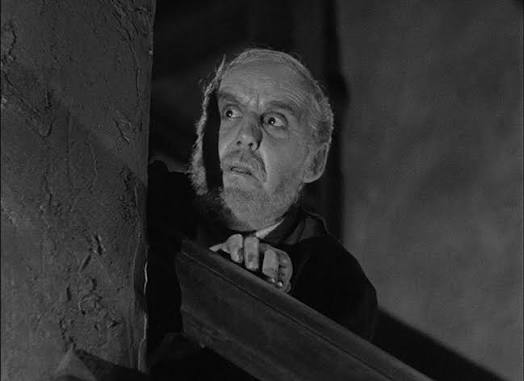
Fifty-five minutes into The Old Dark House’s 71-minute runtime, everything changes. A single hand appears on the staircase’s banister, sliding coyly out from behind a wall. Director James Whale cuts to a close-up—the hand’s two middle fingers curl slightly, then splay outward as the hand glides to a stop. We’ve been warned that this is the hand of Saul Femm, the pyromaniacal, sociopathic eldest brother of the household, let loose from his locked room to fulfill his dreams of burning the house down. But that hand stays poised on the railing for the next three minutes, looming in the background as the house’s butler, Morgan (Boris Karloff), comes downstairs and wrestles with the house’s visitors. It’s absurd for that hand to wait so long, but a dramatic entrance is priceless. Best to wait until all eyes are on you.
The Old Dark House is a deeply queer feast of pre-Code bizarreness. Whale, who was openly gay, brought several British theater actors to Hollywood for this 1932 film, including Ernest Thesiger and Charles Laughton, both of whom were bisexual. (Thesiger, who would play Doctor Septimus Pretorius in Whale’s Bride of Frankenstein three years later, was open about his sexuality, and performed some early stage and screen roles in drag.) The setup is the ur-text for Rocky Horror: on an archetypal dark and stormy night, five normies arrive at a creepy old house and seek shelter with its eccentric residents, only for a transformative evening to ensue. First, we meet brother and sister Horace (Theisger) and Rebecca Femm (Eva Moore)—yes, their name is pronounced like “femme”—and Morgan, who is mute and seems to hold all the film’s pathos in his eyes. Horace is delicate and nervous for the secrets of the house to be exposed; when things get out of control with Saul, Horace hides in his room for the remainder of the film. As for his sister, the moment she meets one of the guests, Margaret Waverton (Gloria Stuart—it’s hard not to marvel at the ensemble with each cast credit), Rebecca monologues at her about the sin of fleshly pleasures—all while Margaret changes into an evening gown, making it seem that Rebecca doth protest too much. As the gang learns that there are other family members, and family secrets, kept hidden upstairs, it becomes clear that this is a story about a distinctly British kind of social repression. Who is this family? What aren’t these people able to say? What motivates each character’s emotional world?
This looks like a classical haunted house movie. Whale and cinematographer Arthur Edesondo a lot with brooding close-ups and sudden shifts in lighting, and the film conjures a sense of unease from distorted mirrors, moody drone sounds that emulate the wind, and Karloff’s lumbering physicality. But is it scary? The film has the feeling of a stage play, a comedy of manners; it’s hard not to think of Thesiger’s performance without hearing his pitch-perfect enunciation of “Have a po-ta-to” at the dinner table, putting up a quivering wall of courteous hospitality to mask the house’s psychosexual chaos. During the film’s first climax, something of a red herring for chills and thrills, Margaret and her husband, Philip (Raymond Massey—what did I tell you about this cast!?), discover the house’s 102-year-old patriarch bedridden in one of the locked rooms. He is not frightening at all, but quite chirpy as he matter-of-factly describes some of the dynamics surrounding Saul’s pyromania. He’s also portrayed by a female actress, Elspeth Dudgeon; Whale explained he couldn’t find a male actor who seemed suitably old enough for the role. Considering the film’s overall approach to gender and sexuality, though, it seems fitting that this quasi-drag character would sit at the head of the family table—and seem the most relaxed.
All of this builds to Saul, who is an absolute menace. When he finally reveals himself from behind that wall, we see a slight man with a white beard and wild eyes; he’s played by veteran English theater actor, Brember Wills. We might have expected someone with the same physical hulk as Boris Karloff, who’s so far set the template for what The Old Dark House envisions as threatening. But when Saul descends the stairs, trembling and appealing to another guest, Penderel (Melvyn Douglas—I rest my case!), for sympathy, he appears to be five feet tall at most. His true nature is unleashed with a high-pitched laugh that doesn’t seem to suit his body, a wicked contortion of a grin, and his sudden maneuvers to grab a knife. But what style he brings to the proceedings, wearing a dandyish dressing gown and slippers, cocking a foot to the side as he dances around cracked porcelain on the floor. Toying with his knife, he delivers bizarre sentence formulations with great ceremony: “Are you interested in flame? I know things about flame that nobody else in the world knows.” And finally, when things turn violent, he lunges at Penderel to vampirically bite his neck—a moment that finds a homoerotic rejoinder in the despondent way that Morgan (spoiler alert for two minutes later) mourns Saul’s death, carrying him upstairs like a lost lover who died in the war.
There’s a lot to recommend in The Old Dark House up through this scene, but Saul is the reason this film is electrifying for me. Saul is about freedom; deviation from the norm entangled with danger. But he’s also all about aura. Cinema makes room for theatrical ways of being that are seductively strange—such characters often invite queer readings, but their impact on a text can be much more expansive. I remember watching Blue Velvet (1986) for the first time in high school and being enraptured by Dean Stockwell’s performance as Ben, “one suave fucker,” as Dennis Hopper’s Frank puts it. Yes, there is his sublime lip-sync of Roy Orbison’s “In Dreams,” but I was equally hypnotized by the moments leading up to it. It is incredible to watch Stockwell’s eyes fluctuate on a dime between droopy and wide open—no moment more immaculately than when he raises a glass for a toast: “Here’s to your fuck, Frank.” But there is a clear menace lurking beneath, conveyed in the shocking way he gut-punches Kyle MacLachlan’s Jeffrey Beaumont without letting down his cool. There’s also the way that he and Frank seem, at least to Jeffrey’s innocent ears, to be speaking in code about drugs, sex, and even homoerotic dynamics in their own relationship; lyrics like “candy-colored clown” are intoned like mysterious spells cast on an affective plane. At an age when I identified with Jeffrey as a peer, I was hypnotized by the register of this scene, dangerously operatic in a way that suited the suburban American unconscious. Ben could embody, and exorcise, everything under the soil of those picture-perfect lawns. After all, “blue velvet” is a texture: a fabric suiting a decadent costume as much as a theater curtain.
We can trace Ben back to Saul, far more complex and magnetic than a straightforward villain. His psychology is left a mystery, but to simply suss out who he is feels limited. How jealous we mortals might be of his ability to perform this kind of scene. Horror is particularly hospitable to these kinds of performances, and I’m reminded of some of the other puzzle-box men I’ve written about in this column: Terence Stamp in The Collector (1965), Will More in Arrebato (1979), Jeremy Irons times two in Dead Ringers (1988). Are these impulses shrouded in shadow necessarily something to be afraid of? James Whale and Brember Wills knew that any adrenaline rush courses with both fear and delight. —Chloe Lizotte
Fourth Night:
Begotten
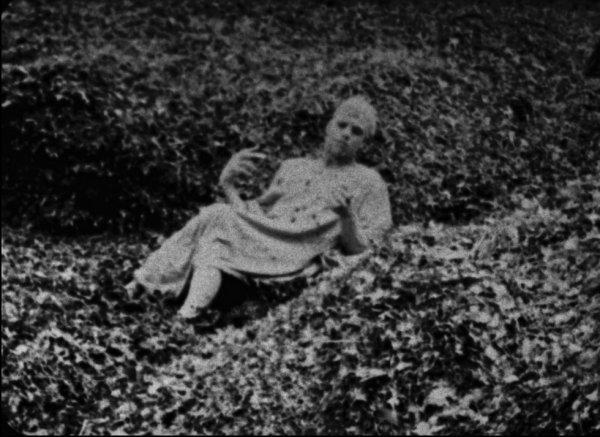
The success of many a horror film rests on the skillful manipulation of our sight—what we are invited to look at in a particular moment, and how that image creates tension by suggesting something we can’t see, or setting up the expectation of an image we might not want to see. E. Elias Merhige’s recently restored first feature Begotten (1989) operates in a somewhat different mode to equally upsetting results. The filmmaker points his camera unerringly at exactly what he wants us to be looking at, but his compositions, and the laborious photochemical postproduction processes he undertook to render the final film, make nearly every black-and-white shot obscure somehow. Merhige filmed his actors on location and then later printed and re-photographed every frame individually, often physically distressing the film stock with sandpaper. As such, images are often smudgy and smeary and there’s something odd about the movement of the figures. I found myself leaning in towards the screen, squinting—what is that fleshy object being sliced from a torso? Is that figure vomiting his own innards? Is the piston-like movement I’m watching at length a close-up of a rape in progress? It’s a uniquely discomfiting experience.
Begotten’s first sequence takes place inside a dilapidated house. In the corner of a white room, there’s a man wearing a mask and robe slumped over in a chair, vomiting inky black blood on the walls. Soon, he produces a razor and begins hacking away at his abdomen in a grisly frenzy. After he’s removed some oily organ-like object and is spent, another figure emerges from underneath him (born from him?), a female, who proceeds to handle the dead figure’s penis until he ejaculates. She then collects his sperm to impregnate herself, though it might take a second to recognize the extreme close-up image is of fingers reaching through a mass of wiry pubic hair to find their way into a vagina. These few actions are extended across the first 15 of the film’s 78minutes. It plays like black metal Guy Maddin, replacing the Manitoban’s winking silent film playfulness with an earthy, ritualized solemnity.
The film’s closing credits reveal the man to have been “God Killing Himself” (Brian Salzburg) and the woman as “Mother Earth” (Donna Dempsey). We’ll meet a third figure soon after the prologue, a bald, seemingly albino form twitching feebly in the muck—he is “Son of Earth –Flesh on Bone” (Stephen Charles Barry). For most of the film, he’ll be dragged about by a small group of robed figures by his umbilical cord and beaten and abused in various ways before finally being dismembered and committed to the dirt. Begotten features no dialogue, only a repetitive soundtrack of groans, chirruping crickets, and ambience, so the provenance of this trio remains obscure throughout. Yet Merhige’s images, hard to parse as they are, provide just enough information at the right times to maintain our curiosity, capturing a narrative that suggests elemental cycles of death and rebirth. An offal film.
Begotten found its way into the world the same year as Shinya Tsukamoto’s Tetsuo: The Iron Man, a similarly grimy and gory hand-cranked 16mm black-and-white debut. They’re quite different films—Merhige’s floats in an opiate haze while Tsukamoto’s pops Adderall by the handful—but they both emerge from painstaking labor undertaken by small groups of craftspeople over long stretches of time outside of traditional moviemaking and the bounds of good taste. Begotten was initially intended as a dance piece for the stage and is populated by members of Merhige’s experimental company Theatreofmaterial, so it’s miraculous how confidently the first-time filmmaker manipulates the cinematic apparatus to create novel, highly unsettling images. Maybe only a novice could have made something like this. Even though Begotten might recall Maya Deren or Aleksei German at moments, the entirety of the experience feels wholly, disgustingly, its own thing. —Jeff Reichert
Fifth Night:
Memento Mori
Memento Mori (1999), a cult classic of Korean horror cinema, starts off with an Alice in Wonderland–like premise. Min-ah (Kim Gyu-ri), a student at an all-girls high school, stumbles upon a diary that belongs to Hyo-shin (Park Ye-jin) and Shi-eun (Lee Young-jin), lesbian girls ostracized by the entire school. An initially innocuous intrigue of accessing someone’s most private thoughts soon takes a dark turn when Hyo-shin kills herself that afternoon. As Min-ah descends further down the rabbit hole of the doomed lovers’ intimate secrets to make sense of what drove Hyo-shin to suicide, supernatural phenomena begin happening to and around her: telepathy, sudden illnesses, and the school’s entry remaining inexplicably locked. But the worst horrors, of course, stem from homophobia, peer pressure, abusive teachers, and growing pains.
Released as a follow-up to Whispering Corridors (1998), then the highest-grossing Korean horror flick, Memento Mori disappointed many for not being very scary. The truth is, it only became a sequel through a retroactive marketing decision by distributor Cinema Service, which wanted to capitalize on the original's record-breaking success. Aside from the all-girls school setting and the narrative revolving around suicide, bullying, and ghosts, the two have little in common. Spiritually, Memento Mori is much closer to The Virgin Suicides than to its predecessor, rendering its horror elements hauntingly sad rather than frightening. But like the Sofia Coppola debut, its dreamy images of adolescent turmoil and heartache get under the skin. The film’s current cult classic status rests primarily on being a strange paranormal queer melodrama, and it doesn’t feel coincidental that its co-directors, Kim Tae-yong (perhaps better known as Tang Wei’s husband these days) and Min Kyu-dong, have not since returned to the genre.
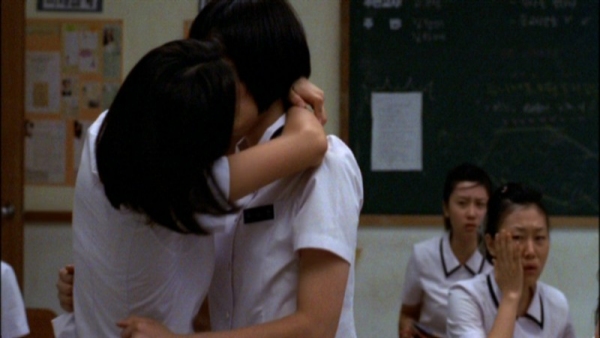
If memory serves me, the first on-screen lesbian kiss I ever encountered was from Memento Mori, which I saw at age 13 on DVD in preparation for watching the more commercially successful Wishing Stairs (2003), the third installment in the Whispering Corridors series. The kiss comes shortly after Shi-eun’s homeroom teacher violently slaps her for the crime of being queer, leaving the poor girl’s lips bleeding. (It wasn’t until 2011 that corporal punishment became outlawed in South Korea.) The classroom’s attention is already fixed on the two girls when Hyo-shin presses her face against Shi-eun’s bloody mouth, a startling act of defiance against homophobia and the pervasive brutality of educational institutions in Korea. Captured by an anxious, handheld camera, the lip-lock feels more desperate and disquieting than romantic and affirming. Surrounded by their jeering classmates, Shi-eun gives in to peer pressure and pushes her away. To my 13-year-old self, those 25 seconds of sapphic rebellion felt like eternity, and I could not understand the disgust on the faces of the onlookers.
Looking back at this experience, I am also struck by how much Memento Mori is about identification. Early on, Min-ah consumes konpeitō, a star-shaped sugar candy, presented as poison inside the diary and attains the telepathic ability to communicate with Shi-eun, who is losing her hearing. She thereby enters the reality described in the journal as an active participant tasked with uncovering the truth behind Hyo-shin’s suicide and restoring her tainted honor. The film does not always make it clear whether some of the flashbacks are actual memories or Min-ah’s imaginings. It’s entirely possible that what unfolds in Memento Mori is akin to Y/N (Your Name) fanfiction, in which the reader is invited to insert themselves into the story.
The ineffable appeal of Memento Mori for me, a closeted trans girl at the time, probably had to do with this self-insertion. Like the two protagonists of Celine and Julie Go Boating (1974) who repeatedly enter a haunted house to collect the Proustian candy fragments that allow them to alter the course of the Jamesian melodrama playing in perpetuity, I kept coming back to the film to vicariously experience the desires I did not yet have the language to articulate. Watching Min-ah was my version of eating the mysterious sweet to enter the virtual reality of girlhood and sapphic yearning. The intensity with which I studied Memento Mori was not unlike that of Hyo-shin’s ghost peering into the interior of the school building through its glass roof. It is no coincidence that Hyo-shin takes her own life on the much-dreaded physical examination day, which amplifies the girls' anxieties about their bodies. Perhaps I was secretly hoping that the film would put a pause on my puberty by haunting me.
In the aftermath of the supernatural upheaval at the school, Min-ah telepathically tells Shi-eun, “I’m sorry I lost the diary.” The latter, with a faint smile, responds: “That’s okay, you can always write a new one.” Kim Gyu-ri went on to play a cross-dressing woman in Portrait of a Beauty, a period drama about a female painter who assumes the identity of her dead brother to pursue a life in art. I have since transitioned and made that virtual reality my own material reality. When I began seriously contemplating transition in my mid-twenties, Shi-eun’s words kept ringing in my ears. It took long enough, but the haunting did eventually arrive. —Jawni Han
Sixth Night:
The Appointment
There’s an entire wardrobe’s worth of ’70s genre hand-me-downs in The Appointment: a pack of slavering dogs on loan from The Omen; a potentially telekinetic teenage troublemaker à la Carrie; Edward Woodward hoisted on his own pompous petard as per The Wicker Man. And yet British director Lindsey C. Vickers’s 1982 shot-for-television-film feels woven out of whole cloth. Shot crisply on location in various verdant patches on the coast of England and Wales, it’s got its own luxuriously spooky texture; its fusion of nightmarish dream logic and domestic psychodrama is as cozily enveloping as horror gets.
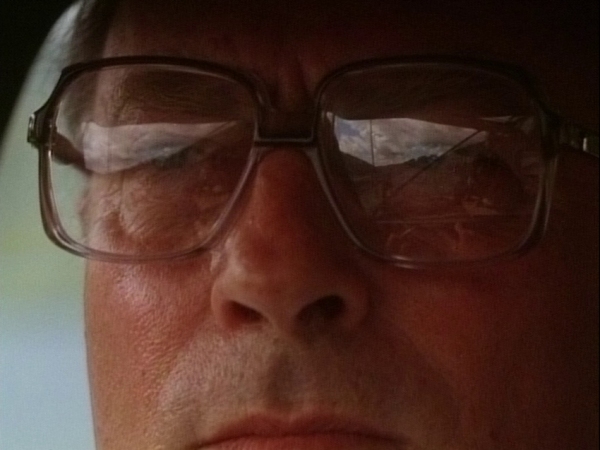
“I live in the supernatural world,” said Vickers in 2020, “the world of ‘how can that be?’” The Appointment stakes out its territory between the empirical and the impossible early on. The opening voice-over is taken from a police blotter pertaining to the disappearance of a local girl, Sandy Freemont, some three years earlier: “Her friend places her positively as entering the footpath through the area known as Cromley Woods, a then popular shortcut for several of the children living in Millard Heights.” The clipped, documentary tone of the narration is quickly subsumed by suggestive fairy-tale imagery of trees and shrubs parting invitingly before Sandy (Auriol Goldingham) as she wanders home in unblemished white knee highs and gloves. There’s nothing positive about what happens next: eerie voices whispering entreaties and then a blindsiding bit of staging that any of the era’s jump-scare purveyors would surely envy. The prologue is ominous, beautiful, and ruthless; it’s also never referred to directly once for the rest of the film, which reroutes towards a new and apparently unconnected set of characters.
There are practical reasons for this strangely self-contained quality: in an article originally written for the now-defunct British horror website Horrified, Ray Newman speculates that Vickers, a veteran assistant director in the U.K. with credits on numerous Hammer titles, shot the introduction after the fact to “spice up” the completed film. (There’s a lot of behind-the-scenes intrigue to unravel here; after being commissioned as part of a privately funded horror omnibus project—one that never came to fruition—The Appointment was submitted to festivals and then feared lost for decades after the mysterious disappearances of its original negative and broadcast transmission tapes.) Taken on purely stylistic terms, the scene feels like an expansion on Vickers’s shivery 1978 short The Lake, about a picnicking couple being shadowed through the forest by an unseen entity, and which itself contains premonitions of its maker’s subsequent—and sadly sole—foray into feature-length filmmaking. In both films, the camera observes the characters with a predatory curiosity: not the lurking, first-person perspective of a slasher but something at once intimate and cosmic, rooted in a tactile, everyday reality yet cognizant of some grand and malevolent design.
The main action of The Appointment is set in the well-appointed home of engineer Ian (Woodward) and his wife Dianna (Jane Merrow), who live with their adolescent daughter, Joanne (Samantha Weysom); a fleeting glimpse of English author Margaret Drabble’s contemporaneous novel The Middle Ground on a bedside table suggests both that the couple is cultured and that the filmmakers are using them to perform a sort of sociological critique—one attuned to details of class, complicity, and generational conflict. “We’re a family—we each count,” says Dianna sternly to her husband, referring—with a not-so-veiled hint of competitive insecurity—to his doting indulgence of Joanne, whose performative Daddy’s Girl act extends to moments of private reflection. Flipping through a book of photos in repose in her room, she seems more possessive than reflective while gazing at Ian; her stockings, meanwhile, call to mind the vanished girl from the opening scene.
To the extent that The Appointment has a plot, it’s as slender and inconsequential as a phantom limb. Ian, whose company bears responsibility for a fatal mining disaster, is required to give testimony out of town at an inquest; his trip is scheduled at the same time as Joanne’s violin recital, leading to a series of sullen outbursts shaded by something more than disappointment. “You’ll have to accept the fact that this is not some great plot directed at you personally,” he snaps in the midst of one sad-eyed guilt trip too many, sounding like a man trying to unwind himself from around his daughter’s middle finger. The conceptual punchline of the film—which isn’t funny, exactly, even as it adopts the shape of a shaggy-Doberman joke— is that pretty much everything that happens from here seems very much to be a great plot directed at Ian, personally, whether by Joanne or a force working through her.
To say more would be to collapse the precisely maintained space between psychology and prophecy—and also ambiguity and gimmickry—where The Appointment enters and takes up residence like a wry, obstreperous poltergeist. Suffice it to say that the myriad narrative head-fakes are geared towards a payoff that’s as surprisingly and provocatively layered as it is inevitable. The most impressive thing about the film—and what links it to other great tales of the uncanny—is its complex, deceptive sense of scale. The modesty of the imagery in The Appointment may have been a mostly practical consideration, but it’s been yoked to artistic imperatives. By shrinking his “supernatural world” to the size of a single household and then plumbing downwards through its conjoined fears and desires, Vickers proves himself an ingenious architect of anxiety, housed in a movie that’s both cluttered and spacious on the inside—a finely handcrafted cabinet of curiosities. —Adam Nayman
Seventh Night:
The Tomb of Ligeia
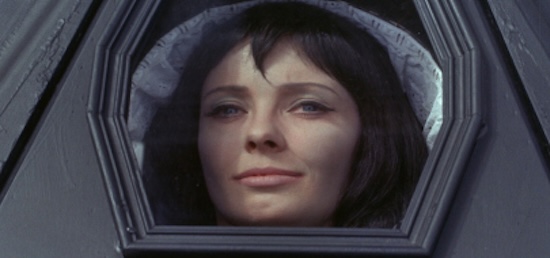
A bell tolls relentlessly at the funeral of a dark-haired young woman whose coffin—yet unburied—bears a window panel showing her face at rest. Unannounced, a black cat jumps on top of the coffin and the corpse momentarily opens its eyes, its peaceful countenance now constituting a smile. Her widower opens the coffin, checks her pulse and closes her eyes again, blaming “a nervous contraction,” while seeming unconvinced by his own words.
***
Roger Corman was one of the most influential, prolific, and fascinating characters in the history of American cinema. An autodidact who made his way up from set messenger to writer-director-producer, he left us in 2024 with more than 400 film projects to his name, the vast majority in the microbudget exploitation category, with titles familiar only to his most die-hard fans. He also supported fledgling talent—Scorsese, Coppola, Demme, Cameron, Nicholson, Hopper—at the birth of careers that would attract infinitely more recognition than his own. His generosity towards the medium itself was paradoxically matched only by his parsimoniousness and outrageous gift for recycling. He viewed expenditure on film projects as a moral issue, deploring the blockbuster budgets a lot of his own progeny would go on to command: “There must be a better use for that much money […] when great stories can be told for so much less.”
Though Corman never truly felt the lash of negative notices, his strongest critical period as a director was between 1960 and 1964, during which American International Pictures financed his lifelong ambition: to adapt the works of Edgar Allan Poe for the screen. This cycle amounted to eight gothic horror films in five years, and if you think that’s good going, he also directed eleven other films in that period—two of which, Tower of London (1962) and Little Shop of Horrors (1960), are especially enduring—and produced one more, Coppola’s Dementia 13 (1963). All eight of his Poe pictures were decorated by his close collaborator, the art director and alchemist Daniel Haller, and all but one starred Vincent Price, culminating in 1964’s captivating The Tomb of Ligeia.
Based on Poe’s short story “Ligeia” this is an outwardly familiar story of a solitary, miserable man living alone in a castle (see also House of Usher [1960], The Pit & The Pendulum [1961], The Raven [1963], The Premature Burial [1962], and ‘Morella’ from Tales of Terror [1962]), who is played by Vincent Price and mourns the death of his wife (see also The Raven and House of Usher), the beautiful Ligeia, named by Poe after one of the Sirens of Greek mythology. Verden Fell (Price) reluctantly remarries: his new wife Rowena is a fair-haired, fiery young woman who aggressively pursues him despite already being engaged to another, and despite Fell trying to dissuade her in a manner replete with red flags. A black cat apparently inhabited by the spirit of the late Ligeia roams Fell’s castle (see also “The Black Cat” segment from Tales of Terror) and unsurprisingly, doesn’t take too kindly to the new match. The ensuing terrible tribulations for the couple conclude with Fell’s castle up in flames (see also The Haunted Palace [1963] and House of Usher).
A consensus of sorts places Corman’s preceding picture, 1963’s immensely accomplished (and phenomenally weird) The Masque of the Red Death, lit by Nic Roeg at Shepperton Studios on a bigger budget than Corman had ever used before, at the zenith of this golden lustrum in Corman’s career. It would be time-wasting and contrarian to elevate Ligeia in opposition to Masque, yet Ligeia does provide robust arguments for its enduring appeal and consummatory place, not just in Corman’s work but also in Gothic horror cinema. Numerous elements of Ligeia place it outside of Corman’s own comfort zone and traditional modus operandi, such that the peak of his own creative command ended up coinciding with a project whose whole conception frustrated and dissatisfied him so much that he dropped the curtain on the whole series and moved away from Gothic horror into biker and counterculture movies (The Wild Angels [1966], The Trip [1967]). Corman had wanted Richard Chamberlain for the lead role in Ligeia, intended for a man under 30, but AIP made the casting of his beloved mainstay Vincent Price a condition of the project going ahead. Heavy makeup and a dark wig were reluctantly summoned to lessen the impact. Corman also attested that while at the development stage of Ligeia, he just couldn’t think of new things to do with the Poe material as he had become conscious—the irony being unusually lost on him on this occasion—of repeating himself. The happy result of this unhappy process was, despite imperfections to which no truly great cinema is immune, the series’ biggest artistic outlier and most forward-looking, and perhaps his most beautiful.
While Roeg’s camerawork on Masque probably represents the clearest visual representation of Corman’s own cracked vision of Poe’s work, Hammer veteran cinematographer Arthur Grant (apparently aided by Francis Coppola’s second unit work) brings to Ligeia a vivid new dimension, filming in natural exteriors, specifically in the grounds and ruins of Norfolk’s intimidating Castle Acre Priory: a relic of 11th-century Clunisian affluence which fills the screen from the first frame. To those who enjoy Corman’s traditional fog-drenched studio cemetery sets (inspired by Universal horror films and imbuing the Poe series with an almost cozy familiarity), this sudden visual departure is like a punch in the throat; it immediately sets the pulse racing.
Much of Grant’s interior photography features a hallucinatory image-layering and blurring effect that underscores the story’s Freudian elements in a more nebulous and perhaps more discombobulating way than Roeg’s—whose Masque was more theatrical, almost Kubrickian—and, combined with Haller’s ever-improving gothic interior designs, creates a pleasing hybrid experience, as if the familiar look of Corman’s Poe cycle is fighting with a more modern style. This befits Corman, as an active force in the transition from old Hollywood to new Hollywood: his production of 1968’s Peter Bogdanovich–directed Targets is often cited as an exemplar of such, featuring an aging Boris Karloff bemoaning his own performance in Corman’s comparatively regressive, Poe-inspired The Terror. Meanwhile Price’s ultra-hipsterish sunglasses (for yes, Verden Fell has an aversion to natural light—see also House of Usher) mark yet more modernity and must surely have settled somewhere in the recesses of Coppola’s mind right up until he was devising Gary Oldman’s caddish, man-about-town incarnation of the titular Count in Bram Stoker’s Dracula (1992).
In an arresting casting choice reminiscent of the Archers’ The Life and Death of Colonel Blimp (1943) and consistent with the film’s theme of reincarnation, both women (Rowena and Ligeia) are played by the English stage actress Elizabeth Shepherd. The necrophiliac parallels with Hitchcock’s Vertigo aside, the most striking attribute of this decision is that, combined with Corman’s more restrained use of Price in a role he didn’t conceive for him, it effectively makes Shepherd the lead, butting up against a more febrile, less overtly imposing (but consequently even more compelling) Vincent Price.
This is—and more importantly, feels like—a significant departure from the preceding Poe films, a contrast best underlined by the testosterone-fueled dinner table sequence in The Raven. That features a more typically dominant Price, together with the ghoulish troll-headed Peter Lorre and his handsome young son Jack Nicholson (surely the most unlikely relations imaginable), facing off against a titanically sinister Boris Karloff…all while poor Olive Sturgess, seated at the end of the table, sheepishly and mutely watches all this willy-waving play out. Shepherd doesn’t steal Ligeia—because Price is still so good—but she balances it by matching his intensity throughout. While Rowena is unexpectedly magnetic in her second Mrs. de Winter plight and subsequent descent into madness and possession, it is the confrontation between Fell and Ligeia that ultimately provides the film’s most crucial narrative pillar: Fell’s life has no purpose unless he can rid himself of Ligeia’s influence over him. Shepherd’s dual depictions arrest the viewer not just by their intra-distinction but by the power of seeing a strong character brought low, and by the complexity of Rowena’s own predicament, especially in comparison with the other female characters in Corman’s Poe cycle (she is stronger even than the unloved Rowena character in the source material).
For this we must thank Shepherd herself, but also the film’s screenwriter, Robert Towne (Chinatown, The Last Detail), whose known gift for character and dialogue injects a level of wit and friction hitherto eschewed by Corman’s Poe films, whose humor otherwise derived largely from the wildness of their characterizations (by Price and Lorre in particular). Towne’s script, poetic and bombastic to a fault, also proposes perhaps one of the finest aphorisms in horror fiction not written by Edgar Allan Poe himself: "Man need not kneel before the angels, nor lie in death forever, save through the weakness of his feeble will." These blasphemous words are attributed to Ligeia and are defiantly read at her grave by Fell, whose anxiety about his late wife’s atheism had by that stage morphed into a justified fear that she might be right: what if the strongest of wills can defy death? —Julien Allen