Dim All the Lights
Jawni Han on The Yards
For those of us who spent our formative years as budding cinephiles in South Korea between the late aughts and the early 2010s, James Gray occupies a very special place in our hearts. Two Lovers (2008) and The Immigrant (2013) were among the most lauded films of those years and went on to appear on numerous best-of-the-decade lists from the most venerated local critics. But there is something unusual and anachronistic about the glowing reception conferred upon him. Whereas his peers such as Quentin Tarantino, Paul Thomas Anderson, and Wes Anderson, all of whom also burst onto the scene in the ’90s, are held up as practitioners of contemporary American cinema—often chatty and stylistically conspicuous—Gray tends to be treated as an unassuming director of the mid-century Hollywood persuasion transported to the 21st century. Enraptured by his astonishing use of space, compositional density, and dark romanticism soaring to nearly mythic heights, Gray’s most ardent champions in Korea often hail him as an heir to Nicholas Ray. To match the hyperbolic tone of Jean-Luc Godard’s praise of the old master—“Cinema is Nicholas Ray”—let me offer in return: for many Korean cinephiles of my generation, the splendors of Hollywood’s golden age live on in James Gray.
Although he may not seem like a distinct visual stylist like the Andersons, it is impossible to mistake Gray’s films for anyone else’s. Commenting on the subtly smudged look of The Immigrant, South Korean critic Jung Han-seok compares the film’s texture to that of wet cotton, soaked with deep melancholy and fatigue. It makes sense: he used to storyboard his films using watercolors. The dewy layer follows wherever he takes his films—Brighton Beach, the Amazon rainforest, or Neptune—and becomes a skin-like surface that sweats emotion, seeping into the viewer’s bones. This unique texture owes much to the director’s lifelong fascination with painting, which began when he discovered Edward Hopper at age ten, and gives his shots tactile expressiveness in a manner similar to the effect of brushstrokes on a canvas. Gray’s films exist in that transitional moment when watercolors are not yet fully set, still wet to the touch.
Through moody lighting and subframing, Gray renders visible his characters’ profound solitude. Whether in a two-shot or a mob scene, they always seem lonely and isolated, as if held captive in a cell. Like in Greek tragedies and operas, his films are shaped by the ruthless forces of fate, which his protagonists desperately try to escape but end up surrendering to. In the final moment of Two Lovers, after talking himself out of a suicide attempt, Leonard (Joaquin Phoenix) goes back to Sandra (Vinessa Shaw), whom his family has set him up with, and presents an engagement ring initially meant for Michelle (Gwyneth Paltrow), who has decided to give a tormenting relationship with a married man another go. In a close-up, Leonard’s eyes are submerged in shadow, with a trail of tears glistening ever so faintly down his cheek. After the two share a kiss, the film cuts to a wide shot showing the lovers in an embrace surrounded by other party guests as the camera slowly pulls away. By pitting Leonard’s despairing acceptance of his fate against Sandra’s tenderness and the cozy surroundings bathed in warm light, Gray creates one of contemporary cinema’s most forlorn images. And the film’s watercolor-like texture gives the illusion that the screen itself is shedding tears on behalf of the man trapped in the loneliest place.
His second film, The Yards (2000), which tells the story of a young ex-convict who struggles to turn a new page in his life, still feels like a perfect summation of all of Gray’s thematic and formal interests. In its opening shot, the camera is mounted on the back of a 7 train passing through a tunnel, taking us from darkness to rusty tracks under an overcast sky. Inside the moving train is our protagonist, Leo Handler (Mark Wahlberg), looking as lost as a five-year-old boy separated from his mother at a mall, with his eyes wandering aimlessly until landing on a police officer standing nearby. He comes home to a warm reception where his family and friends have gathered to celebrate Leo’s release. He strives to be a “productive member of society” and good son to his ailing mother, Val (Ellen Burstyn). But he does not have the patience to follow sage advice from his well-to-do uncle Frank (James Caan)— a stepfather to his cousin Erica (Charlize Theron), who’s in a relationship with his old buddy Willie (Phoenix)—to enroll in a two-year machinist program. It doesn’t take long before he gets pulled right back into the world of grift and violence when Willie, a former partner in crime Leo took the fall for, informs him of more “lucrative” opportunities at Frank’s railway car repair company.
The opening image of the train augurs the tragedy that will descend upon Leo. Although the train emerges from the tunnel to the light, the camera is fixated on the abyss beneath the passageway as it grows distant. This reverse orientation gives the impression that Leo is passively being pulled into the unknown as if by fate and foreshadows the temptations from his past awaiting him at home. The fatalism of the speeding train is made even more apparent when contrasted with the opening sequence of Hou Hsiao-hsien’s Dust in the Wind (1986), wherein the camera is mounted on the front of a moving train approaching the light at the end of a tunnel, encapsulating its romantic attitude toward the growing pains and first love set against Taiwan’s pastoral landscapes. According to Hou’s longtime co-screenwriter Chu Tʻien-wen, the Taiwan New Wave trailblazer liked to describe his filmmaking ethos as an attempt to capture “the will of the heaven” on camera. The distant master shot, one of Hou’s hallmarks, is the approximation of the divine gaze observing the mortal world from a great height, which renowned Taiwanese film critic Lan Tsu-wei likens to Georges Seurat’s pointillism.
A similar sense of characters at the mercy of what the gods have intended for them is at work in The Yards, but Gray instead observes their struggles at eye level and draws from a different painterly tradition. In preparation for the film, he took his cinematographer Harris Savides to the Metropolitan Museum of Art to study select paintings that illustrate the kind of lighting he wanted. Savides recounts that Gray hoped to replicate what he calls the “voluptuousness of death” that permeates Georges de La Tour’s Baroque paintings, in which the entire scene is lit by a dim candlelight and much of the subjects are enveloped in darkness. This is recreated most literally when a blackout befalls Leo’s homecoming party, prompting the guests to take out candles to light the apartment. Death is lurking in the air, and the rest of The Yards is driven by the very human desire to resist it, often by forcing it upon others.
The film’s dramatic tension hinges on the dilemma of choosing between one of three deaths: physical, social, and spiritual. During a criminal operation gone awry at the Sunnywide repair yard, Willie stabs an uncooperative yard master to save himself and his team from going to jail and by extension, Frank’s company from going under. At the same time, Leo beats up Rifkin, a cop trying to apprehend him, leaving him unconscious before running away. Fearing potential incarceration and ruining the business, Willie puts a gun in Leo’s hands and instructs him to assassinate the officer in a coma at a hospital. Pulling the trigger would result in the physical death of Rifkin and the degradation of his own conscience and social standing, but it would protect the gang from the law, the latter of which he has already done. This time, Leo puts away the gun to save his soul and leaves town. A citywide manhunt ensues, and a raid on Leo’s house exacerbates Val’s heart disease and puts her in a critical condition.
Leo, once again faced with impossible choices, returns to Queens and thus risks a social death to save his mother’s broken heart from giving up. Following a heart-to-heart with the bed-ridden Val, who laments that there is no one else looking after them, he is resolved to fight for his life and set things right. When Erica, with whom Leo had an incestuous relationship when they were teenagers, discovers that her boyfriend is actually responsible for the murder, she begs Frank to help him. But her stepdad prioritizes the survival of his criminal enterprise, and together with Willie, makes multiple attempts to take Leo out. Soon, their henchman, Raymond (Andy Davoli), armed with a pistol, sneaks into the Handler home where the fugitive is ready for retribution. As Raymond treads lightly across the corridor searching for his target, the camera slowly tracks him from the front, moving across the space in reverse. The following shot deliberately zooms in on Leo, awaiting with a gun at the end of the hallway. Gray’s camera here feels like a medium through which the divine imposes its will, luring Raymond into a site of his demise and putting his life in the hands of a man consumed by righteous anger. He shoots the intruder in the earand orders him to relay a stern warning to Willie: “He better start looking over his fucking back!”
The final half hour of The Yards sees Leo, his heart now hardened to those he once considered “family,” retaliate on a much grander scale as he threatens to expose Frank’s corrupt business practices. He does succeed in reinstating his honor by forcing a backdoor arrangement, but this triumph comes with a devastating consequence; back at his uncle’s house, the distraught Willie accidentally kills Erica. The unrelenting sequence of treachery, vengeance, and killing reveals a rigid governing structure imposed on the world of mortals—the one that penalizes a transgression by exacting it right back onto the doer with what Simone Weil calls the “geometric rigor,” which she identifies as the foundational principle for Hellenistic thought. Justice for ancient Greeks was the divine intervention in maintaining the balance of force—often taking the form of violent acts—distributed across the world, and it does so with pinpoint accuracy and impersonality. When the terms of the backroom deal are talked out, Gray shows Frank’s and Leo’s faces in close-ups with shallow depths of field. This intimates both their false conviction that they are in charge of their own destinies and their obliviousness to the unintended repercussions of their actions. By the time this frightening geometry becomes visible to Leo, it is too late, and he has unwittingly become a tragic hero.
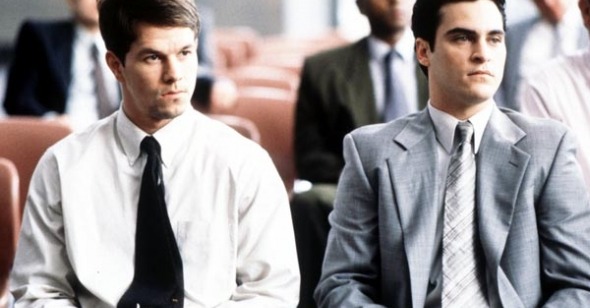
The film concludes with Leo, clearer-eyed than ever, testifying against the crimes of Frank, Willie, and a string of officials they bribed at a hearing organized by New York’s Attorney General. The final shot returns him to a subway train, where he is seated with an impenetrable countenance. The camera zooms in on him as if to probe what he is thinking about. At a repass that precedes this moment, we see him escorting Erica’s little brother, Bernard, who has stepped outside, overcome with grief.Leo is resolved to become a “productive citizen” and a loving brother figure to Bernard so that the boy can have a life different from his. Many of Gray’s tragic heroes end up accepting their fates, but they still strive within their limited means to do what is right to ensure brighter futures for their loved ones. “I messed up, but I’ll do what I can so that you can get it right” feels like a pretty good summary of the ethical stakes that the director has been grappling with throughout his career. As trite as that may sound on paper, his films remind us that compassion and sacrifice are not easy in a world that is turning increasingly cynical and transactional. His cinema may not be optimistic, but it is driven by an unshakable faith in the possibility of change.