Discomfort Zone
By Julien Allen
New York Film Festival 2026:
The Unknown
Dir. Arthur Harari, France, NEON
“I will tell you the whole story of my life, and it is a life that truly began only on the day I met you. Before that, there was nothing but murky confusion into which my memory never dipped again, some kind of cellar full of dusty, cobwebbed, sombre objects and people.” ―Stefan Zweig, Letter from an Unknown Woman
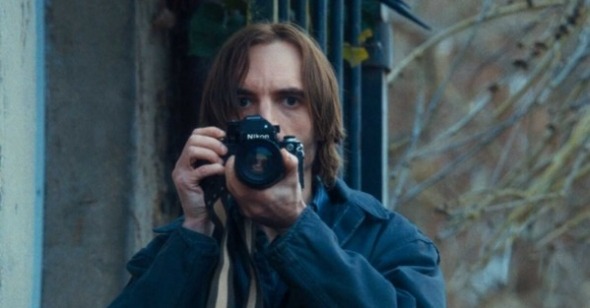
Writer-director Arthur Harari plays a neat trick in The Unknown, right from the start. Having had the good fortune to cast two of the most famous actors in France, he deploys the first (Léa Seydoux) as the unmistakable face of the film and renders the second (Niels Schneider) completely unrecognizable. Seydoux here is very Seydoux: she has a noticeably natural and everyday physical presence, contrasting with the polished glamour we associate with her screen image, adding a compelling level of tangible truth to her renowned emotive dexterity. Schneider, magnetically gaunt with straight long hair, looks almost otherworldly. His striking appearance foreshadows the more fantastical elements of the film’s plot, which are otherwise visually underplayed. His enormous eyes weigh down his shrunken head, such that he resembles Le silence de la mer’s Howard Vernon playing Christ. This device is not gratuitous—nothing, however challenging or opaque, is gratuitous in The Unknown—especially given that identity and visual familiarity are active components of the narrative. Body-swap, previously the cinematic preserve of comedy (Freaky Friday, All of Me) or genre (Face-Off, Possessor), here provides the starting point for an absorbing existential drama, which at times thrillingly exploits its marriage of narrative thriller techniques and Freudian fantasy.
David (Schneider), a photographer, is seduced at a party by a woman (Seydoux) whom he had, on a previous occasion, fixated on and photographed from a distance. After a wordless, charmless fuck in a back room, during which Seydoux’s orgasm resembles something closer to childbirth, David (now Seydoux) wakes to realize that having just been inside her, he is now completely inhabiting the body of this mysterious woman. Traumatized by his new body, he discovers that its previous owner was Eva, a German B-list actress, and that both have been the victim of a predatory entity who—rather like the invisible evil of It Follows—passes on its shocking, disorienting anomaly through sexual congress. David tracks down his previous male body, now living on the street, only to learn it has since been colonized by a teenaged girl, Malia, who slept with the Schneider-shaped entity at another party. Malia’s stark predicament, trapped in the body of the man who seduced her, is exacerbated by her immaturity and fear, and Malia and David will embark on a hunt for a solution, confronting family members in the process. Their collaborative attempts to solve and reverse the phenomenon become highly strained (even at one stage contemplating having sex with each other) and gradually evolve towards severely differing levels of tolerance and acceptance.
The film takes pains to present its own structure as a journey in both time and space. David’s lonely photographic predilection is recreating images from his own past, repositioning his camera at the site of old family pictures and postcards to gauge the differences time has imposed (a project he has inherited from his father). In recognizing what physical and emotional experiences he shares with his late father, David is already exploring his own self. We encounter him as he is about to embark on the horizontal axis of this journey, breaking out of his narrow, self-reflexive existence and confronting the much wider world, learning about the lives of others in a most direct and extreme way. The vertical axis of time lingers over the film as the photos reappear occasionally and we find ourselves imagining what possible future these characters are facing.
The delicious visuo-psychic challenge Harari sets up for us, which will frustrate some but inspire others, is that of spectatorial identification. The main character of the film, presented at the start, is David, played by Schneider, whose personality, much exposed by his own taciturn behaviors and the anxiety he causes his friends, will soon be transported into the body and face of Seydoux who has until that point been presented—misleadingly—as a silent, beautiful chimera turned predator. She, as David, will anchor the film thereafter. After both metempsychotic transformations have occurred, a triangle of confusion reigns, such that the binary identification riddle of, say, Face Off (“wait, is Cage the good guy or is it Travolta?”) is elevated into a chaotic emotional puzzle, in which the audience’s sympathy struggles to latch onto either protagonist in a visually linear way. Our sympathy may instead lapse into the generic (i.e. sympathy towards all characters who are so affected) given the cerebral difficulty of the specific. The humanity of the film resides here: it operates as an electroshock-fueled invitation to outflank our standard operating procedures when identifying with screen characters visually, and to begin to dig into, comprehend, and relate to “others” (in all senses of that word) on a much deeper level. The souls (Eva, David, Malia) to whom we have been introduced are still intact and worthy of investment, but their afflictions mean that they no longer fit the world around them. That is a challenge for them, but more valuably it is a challenge for us.
It’s tempting to see in The Unknown’s depiction of transmigration a vessel for the exploration of the transgender experience, given the numerous levels upon which this conceit appears to operate within the film. One cannot ignore the overtones of gender diversity in the practical dilemmas of both David and Malia, foregrounded in the physical: in the way Seydoux (playing Schneider’s character) examines her newly female body in intimate detail and in the way Schneider (playing the teenaged girl) rejects his new body, just as a young gender-curious teenager might reject their assigned male body following puberty. Added to this, the characters are buffeted by a relentless sense of isolation and lack of social confidence, which is both naturally assumed in advance (by both us and them) and subsequently demonstrated by their interactions with the public, and which eventually weighs them down as they seek sustainable ways to carry their oppressive new identities. In what turns out to be a mental projection, Malia (Schneider) confesses to her father (played by Romanian auteur Radu Jude) at her sister’s wedding that she has now “become” this strange, atrophied man. She relates information only her father could have known about them both, which—emanating from Schneider’s depressed, scrawny frame—provokes only more fear and confusion on Jude’s part. This climactic sequence combines shock, heartbreak, disgust, violence, and rage, none of which feel misplaced, and are, if anything, underplayed.
While not prepared to reduce the entire project to this one element, Harari has explicitly mentioned gender identity as a key component of the film’s central theme of embodiment and identity, and his transgender allegory is consecrated by an extended sequence late in the film with a third party, Sophie (Victoire Du Bois). She is discovered by David and Malia reaching out online for persons who have succumbed to the same phenomenon and her ordeal hints at something much more earthbound and relatable than the main characters’ paranormal experiences. She is presented in an early photograph with a tomboyish look; she is also now a shut-in, having decided to “work through” her experience with the help of apparently protective parents. When Seydoux approaches her and offers help, she asks her father to show Seydoux out. Whilst we were privy to the metaphysical happenings in the opening act, the film has by this stage migrated from sci-fi towards kitchen sink drama, in the presence of a character who has had more time to work out a defeatist, internalized, earth-based solution with strong overtones of re-education.
Harari, a man of numerous talents (actor, director, writer), takes inspiration in his work from diverse sources. Anatomy of a Fall—which he co-wrote and was directed by his wife Justine Triet—nodded strongly towards the twisty human mess of Otto Preminger’s Anatomy of a Murder, and this film’s use of behavioral assumption and projection situates The Unknown in the same stable. His 2010 Japanese epic Onoda: 10,000 Nights in the Jungle (an equally existential work masquerading as a more traditional historical biopic) owes a significant stylistic debt to the prose poetry of Terrence Malick’s films, and we can note in both Onoda and The Unknown an arresting image of a river which runs in both directions at the scene of a key character’s death, symbolizing the threshold of mortality and the disruption of natural order all at once.
Harari’s most significant narrative inspiration for The Unknown is comic books, whose juxtapositions of the fantastical and the mundane define the film’s mood. It’s a literary genre with significant cachet and traction in Europe, and what it shares with its more ludic Anglo-Saxon equivalents (most prominently DC and Marvel, The Unknown’s entity is essentially a “symbiote”) is its ability—due to its historically low cultural standing—to take enormous liberties with the reader’s imagination without inspiring an incredulous response. (The nearest equivalent in the film world is the psychotronic genre, but The Unknown is as far from this in tone as it can be). This freedom allows Harari and his brother Lucas (adapting Lucas’s graphic novel The David Zimmerman Case) to approach their exploration of truth without the need for pure realism, or even for everything needing to make complete sense. The film thus feels more like a succession of encounters and hypotheses than a coherent whole. For some, the plot’s narrative deficiencies or elisions will be disqualifying, while other viewers more comfortable with the grammar of comic books may not even notice them.
While The Unknown also evokes Antonioni’s The Passenger (and Blow-Up), in one respect Harari’s film feels more like his generational counterpart, French-era Luis Buñuel, in its dense profusion of “what are we watching?” moments. Buñuel (a Freudian) depicted his characters in The Discreet Charm of the Bourgeoisie almost entirely through their fears, anxieties, and egos, by blurring the visual and narrative distinction between the real and the repressed. In Freud’s The Uncanny (an essay which perhaps belongs on a film school curriculum), the author recounts a personal anecdote of spotting an old man in an overcoat on a train and being disgusted at his lowly appearance, only to realize that he is looking at his own reflection in the mirror of a wash basin cabinet. Dreams, projections, flashbacks—all familiar components of psychological drama today—abound in The Unknown, but none of these are heralded or signposted, piling on an even greater level of mental disorientation, which Harari offers as a portal to greater organic understanding, both socially and cinematically. These questions we are reaching for while watching The Unknown differ only from the central hypothesis of all fictional cinema by a question of degree. A question like: “What are we watching right now…is this part real?” doesn’t really belong in the cinema, if one takes the time to think about it. There is value in grabbing hold of random thoughts and feelings as flotsam in a whirlpool of ideas.
What we are left with at the end is the requisite amount of uncertainty, a glut of questions served up by our own psyches, and a perverse and provocative feeling of release for David/Seydoux, which permits us even to tilt at the ludicrous proposition: “Was this person’s life really as fulfilled before the transformation as it is now?” Zweig’s “unknown woman” (which is the accurate meaning of this film’s original title, L’Inconnue) gave her whole life to a man who didn’t deserve her, and her tragedy is that this was still the making of her. Seydoux here brilliantly incarnates a cloistered male who ultimately discovers much from his affliction—a mother’s love, a child’s fear, a woman’s world. In this respect he achieves a level of awakening any strong protagonist should aspire to, but an awakening awash with fear, helplessness, and insurmountable pain.